
A well planned wardrobe can change how you start each day and how a room feels without asking for a lot of space. Small choices about layout and finishes create outsized benefits when they match real life routines and habits.
Good wardrobe design balances neatness with speed so mornings do not feel like a scramble. The right tweaks can make a closet calm, quick to access, and oddly satisfying to open.
1. Make The Most Of Vertical Space
Tall storage turns wasted height into room for items you reach less often while keeping daily pieces at eye level. Add shelves that rise toward the ceiling and use clear boxes to keep seasonal things visible, which makes retrieval quick and less guesswork.
A narrow ladder or a slim step stool tucked to the side becomes a helpful companion rather than a nuisance, and it keeps you from stacking and toppling things.
When taller elements have consistent spacing they read as calm and organized, which tricks the eye into seeing a tidier area.
Stacking shelves with a system gives every item a place and frees floor area for movement or a stool to sit on. Keep a row of open hooks for belts and scarves and a few deeper shelves for bulky sweaters so textures do not get crushed.
Group related objects together so your hand learns where to reach, and label lower boxes with simple words for quick scans. Over time the space feels familiar, like meeting an old friend, and small habits make the whole operation smooth.
2. Choose Flexible Storage Modules
Shelving that can shift up or down makes it easy to respond to a changing wardrobe without remaking the whole unit. Swap a rod for extra shelves if your shoe collection grows, or slide in a drawer module if accessories start multiplying, and the wardrobe evolves with you.
Keep a few standard sized bins so that additions look intentional rather than haphazard; matching geometry calms visual noise. Flexibility also saves money because you adapt existing structure instead of starting from scratch.
Modular pieces allow you to play with function and form in an afternoon rather than a long renovation project, which is handy when life changes quickly. Pick components that click or screw in with minimal fuss and you avoid tools that collect dust.
When the system is simple to reconfigure, experimentation feels less risky and more fun. The ability to tweak keeps the closet useful and avoids that sinking feeling when storage stops fitting daily needs.
3. Use Strategic Lighting To Improve Functionality
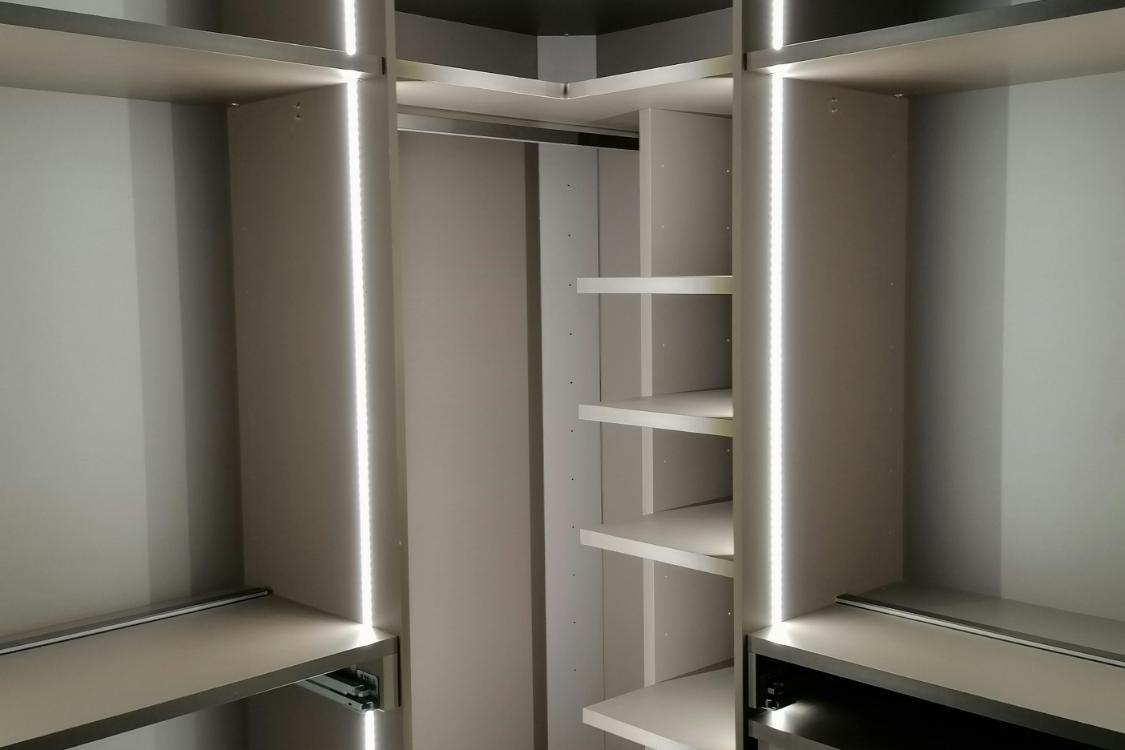
Lighting reveals color and texture more accurately than a single ceiling bulb and makes outfit choices easier on the eyes. Install strips or puck lights inside shelves to brighten deep corners where small items like jewelry or ties tend to hide.
A motion triggered fixture saves the fumbling at night and preserves bulbs, and warm temperature light keeps colors honest without feeling clinical.
Layered lighting that combines interior illumination with a switchable overhead option gives you a choice between soft mood light and sharp task light.
Reflective surfaces amplify the effect of lighting so a modest fixture can do a lot of heavy lifting. Place a small lamp on a shelf or use battery powered under shelf lights behind a rail to avoid visible wiring and keep a clean look.
The right light can turn a practical closet into a pleasant ritual space where outfit decisions feel clear and quick. Bright pockets inside the wardrobe reduce mistakes and help clothes last longer by exposing dampness or wear early.
4. Introduce Mirrors And Reflective Panels
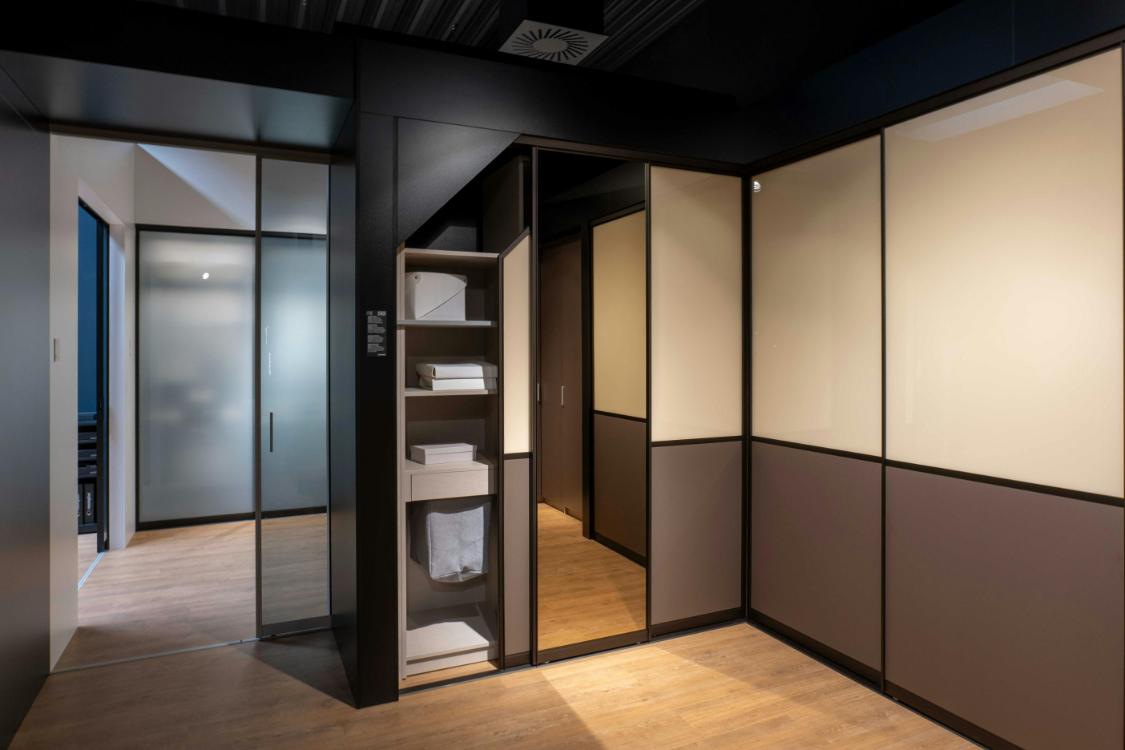
A well placed mirror extends sight lines and helps a small room breathe while offering the obvious benefit of outfit checks. Full length panels on the inside of a door or on a sliding panel double as a dressing mirror without taking separate wall real estate.
Mirrored surfaces catch light from nearby windows and spread it, which softens shadows and reduces the need for extra fixtures during the day. When mirrors face each other sparingly they create depth without the dizzying loop that can overwhelm a small space.
Many people find that choosing from a sliding wardrobe door range with mirrored options gives them function and reflection without sacrificing floor space.
Mirrors also act as design punctuation, providing balance when heavy wood or matte finishes dominate a scheme. Use framed or frameless options depending on whether you want contrast or a seamless look.
Even a slim vertical mirror between sections can make the whole setup feel intentional and polished. Such small reflections often make the difference between a closet that functions and a closet that fits into the rest of the room’s personality.
5. Create Dedicated Zones For Different Uses
A clear plan that assigns zones for ready to wear items, seasonal gear, and accessories reduces decision fatigue and keeps daily routines humming.
Place everyday clothing at chest level for quick visibility, reserve lower shelves for shoes and heavier items, and keep an upper shelf for storage boxes that you visit rarely.
Adding a small rail or bench area for outfit staging means you can plan a look without scattering pieces across a chair. Over time the separation of tasks helps your brain file routines into neat categories so mornings feel automatic.
Labeling shelves or using color coded baskets reinforces the zone idea and speeds up retrieval when you are in a hurry. A designated space for laundry and worn items prevents them from migrating into clean zones, keeping maintenance simple.
Treat each zone as a tiny workstation with its own rules and tools, and you find the wardrobe supports your habits rather than the other way around. Simple boundaries foster calm and make the whole dressing process feel like second nature.