
Plumbing choices shape daily comfort for older adults in ways that often go unnoticed until a problem forces attention. Thoughtful fixtures and simple upgrades reduce strain, cut down on falls and make self care easier to manage.
A little planning up front can keep a household safer and save money over time by preventing damage and expensive repairs. The items listed below combine common sense with practical design to help people age in place with dignity and ease.
1. Walk In Shower With Grab Bars
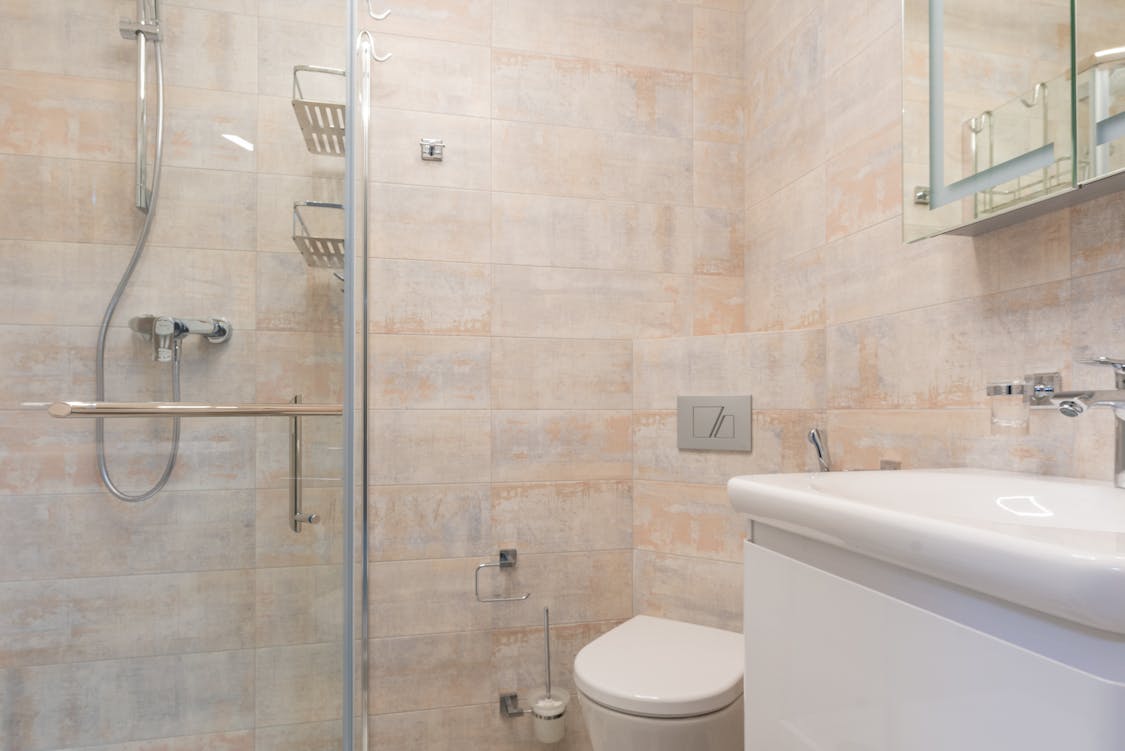
A walk in shower that removes the need to step over a high ledge makes entering and exiting much safer for someone with reduced mobility. A low threshold or curb free pan paired with a built in seat gives the user options to stand or sit while washing, which can reduce fatigue during routine tasks.
Good placement of grab bars near the shower entrance and close to the seat helps with balance and gives dependable handholds when wet surfaces are involved.
Consulting reliable tradesmen for Brisbane senior communities can make sure bars and supports are mounted securely to handle weight and repeated use. Stainless steel or powder coated steel offers long lasting performance and resists corrosion in high humidity.
Placing a bar both vertically and horizontally gives multiple ways to steady oneself during transfers and while reaching for controls. Smaller touches like a textured floor and a handheld showerhead nearby complete the setup and make daily routines smoother.
2. Handheld Showerhead With Long Hose
A handheld showerhead on a flexible hose is a small upgrade that pays big dividends for personal care and safety. It allows a seated bather to reach all areas without twisting or stretching, which reduces the risk of losing balance.
The device also makes rinsing hair and cleaning the shower simpler and less tiring for a caregiver who may assist on some days. Longer hoses that stay stable and do not tangle are more convenient and reduce the need to lean in awkward positions.
Look for models with easy to use controls that stop and start water flow without a lot of force, and a slide bar that sets the height where it will be used most. Anti scald settings and flow restrictors can keep water comfortable and avoid surprises that might startle a user.
The hose material should be kink resistant and easy to replace if needed so maintenance stays simple. Little changes to positioning and reach make a big difference in how people feel about bathing every day.
3. Comfort Height Toilet With Bidet Function
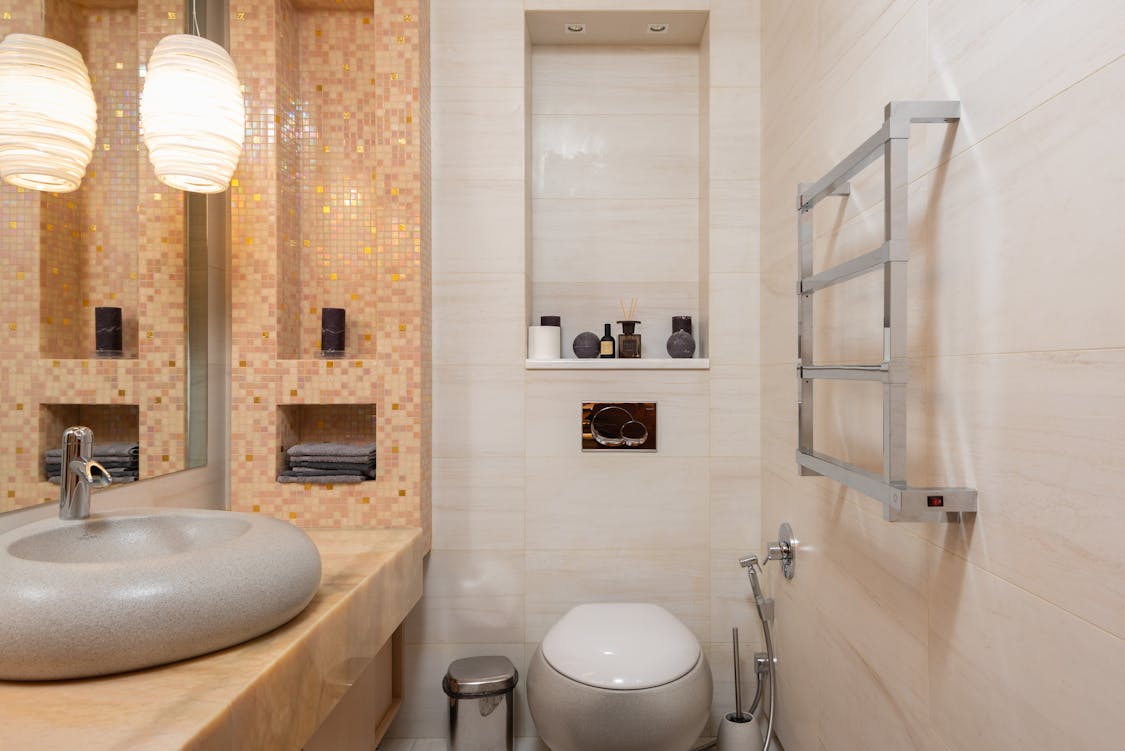
A comfort height toilet raises the seat to a level that reduces strain on knees and hips when sitting down and getting up. That single change can turn a daily chore into a less painful task and reduce the need for grab bars or additional support devices.
Pairing the taller bowl with a built in bidet or dedicated washlet improves hygiene without forcing awkward twisting or reaching motions. For many people, gentle rinsing adds dignity to routine care and reduces the chance of skin irritation.
Choose a seat that locks in place and a bidet control panel that is intuitive, with large buttons or a simple lever for people with limited fine motor control. Models that offer a warm water option and adjustable spray strength give a pleasant experience without being overly complex.
If electricity is a concern pick options that run on low power or that have battery backup for short outages. A small investment here often translates into greater independence.
4. Lever Handle And Touchless Faucet Controls
Faucet knobs that require a tight grip can be hard to operate for someone with arthritis or limited hand strength. Lever handles move with a push or lift motion that uses larger muscle groups and less fine manipulation, which makes them more accessible.
Touchless faucets remove the need to grasp anything at all and are also helpful when hands are unsteady or full. Both solutions cut down on bending and awkward reaching and can be a hygienic choice when preparing food or tending to wounds.
When upgrading to touchless be aware of sensor placement and the power source to avoid surprises after installation. Battery powered units are easy to retrofit and keep drains and counters dry during brief power outages, while hard wired systems offer steady performance for busy homes.
Keep the water temperature preset or pair with temperature limiting hardware to avoid sudden hot spikes. Lightweight adjustments to how faucets are used can have a ripple effect on comfort across many daily chores.
5. Anti Scald Valve And Clear Shutoff Access
A thermostatic mixing valve set to a safe maximum temperature prevents scalding by blending hot and cold water before it reaches the tap. That layer of control is especially important if cognitive changes or slowed reflexes make it hard to back away from unexpectedly hot water.
Placing well labeled individual shutoff valves near major fixtures gives a quick way to stop leaks without calling a plumber, which reduces the risk of water damage. Better safe than sorry is a good motto when protecting both people and property from plumbing mishaps.
Make sure shutoff valves are easy to reach and clearly marked so anyone in the household can act in an emergency. Routine checks of valves and occasional exercise of the mechanism will keep them from seizing up over time.
Lowering the water heater thermostat to a safe level and combining that step with anti scald hardware adds redundancy that makes the system forgiving. Clear labeling and simple instructions pinned near the main access points take the guesswork out of a stressful moment.