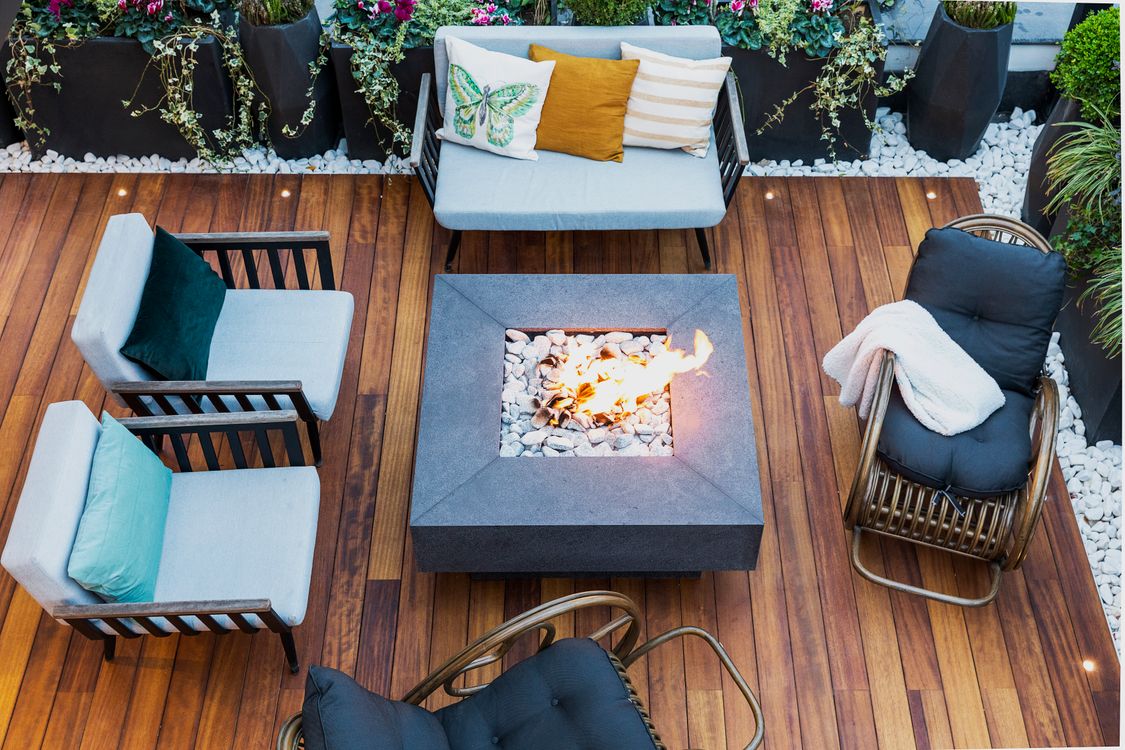

On January 1, 2026, the County of San Diego’s 9th Edition Consolidated Fire Code took effect. It runs 87 pages, ratifies the amendments of twelve unincorporated fire protection districts, and sits on top of the 2025 California Fire Code.
Most of it concerns things homeowners never think about — apparatus access roads, water tank sizing, blasting permits. But several sections land squarely on backyard fire features.
The twelve districts covered are Alpine, Bonita-Sunnyside, Deer Springs, Lakeside, North County, Rancho Santa Fe, Rincon Del Diablo, San Diego County Fire, San Marcos, San Miguel, Valley Center, and Vista.
Clearances, Attendance, and Spark Arresters
Section 307.4.3 sets the baseline for portable outdoor fireplaces. They must be used per manufacturer instructions and cannot be operated within 15 feet of a structure or combustible material.
There is an exception for one- and two-family dwellings, but it comes with a condition: any wood-burning warming fire needs a spark arrester of half-inch mesh or smaller, or must follow the manufacturer’s listing.
Section 605.3.1 goes further on arrester specification. Any chimney, flue, or stovepipe attached to a fireplace, stove, or barbecue needs welded or woven wire mesh at 12-gauge or thicker, with openings no larger than half an inch.
Section 307.5 covers attendance. Recreational fires and portable outdoor fireplaces must be constantly attended by an adult until fully out, with a 4-A rated extinguisher or equivalent — a garden hose, water barrel, sand — immediately available.
That last one reads like boilerplate until you consider that it is enforceable, and that fire districts can issue infractions carrying fines up to $1,000 in most of the districts that adopted the amendment.
Why Gas Has Effectively Won
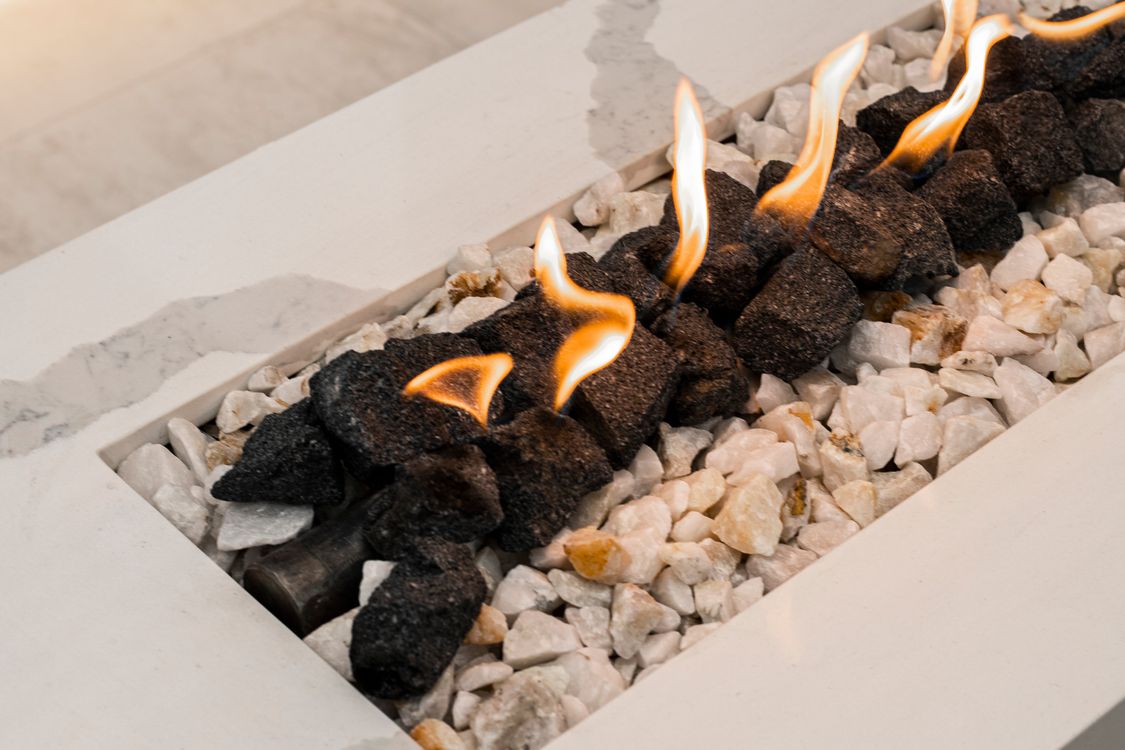
None of the above bans wood. The San Diego Air Pollution Control District still exempts recreational and cooking fires from its open burning rule, provided the fuel is clean dry wood, charcoal, natural gas, propane, or cooking fuel.
But nuisance smoke remains citable as a public nuisance, and in Wildland-Urban Interface areas the practical picture is different again. Fire marshals in the WUI communities and most HOA guidelines in Rancho Santa Fe, Poway, Del Sur, and the eastern county have made wood-burning features functionally unavailable on new installs.
The result is that natural gas has become the default for permanent fire features in this county, not because of any single rule but because it clears every hurdle at once. No embers, no ash, no no-burn day restrictions, no arrester requirement.
Propane fills the gap where trenching a gas line is impractical. The common approach is a masonry pit with a concealed access door sized for a standard 20-pound tank.
The Permit Question Nobody Asks Early Enough
Permitting depends on what is being built rather than on the fact that it involves fire.
Masonry fireplaces and most wood-burning prefab units require a building permit. Many gas-only decorative fire pits do not, but they still require plumbing and gas permits, plus electrical if there is an igniter or integrated lighting.
Gas sizing is where projects go wrong quietly. A linear fire feature can draw 150,000 to 250,000 BTUs. Splicing into an existing house line without calculating total system load produces a feature that starves the water heater, or worse.
Setbacks add another layer inside the City of San Diego, where fireplace enclosures get specific yard encroachment allowances with a minimum two-foot-six clearance to the property line.
The county’s Zone 0 defensible space work is running on a parallel track and will affect where features can sit relative to a house in Very High hazard zones.
For anyone planning a fire feature this year, the sequence that avoids trouble is straightforward: confirm your fire district, confirm your hazard zone, then design. Reversing that order is how a finished pit ends up needing to move.